
About
A standing platform, not a one-off convening
The Eurasia Panel is a standing, multi-faith, multi-sector dialogue mechanism for the post-Soviet space.

Origin
How the Panel began.
-
July 16–17, 2026
Public launch
The Eurasia Panel launched publicly at the IRF Peace Builders Forum.
-
July 18, 2026
Founding strategic planning session
The Panel held its founding strategic planning session.
Across the post-Soviet space, religion has rarely been left to itself — managed by the Russian Empire before the Bolshevik revolution in 1917, by the Soviet state for most of the century after it, and still approached today, in much of the region, as a security question first: something to be registered, monitored, and contained rather than engaged. The vocabulary of extremism attaches easily to communities whose only distinguishing feature is that they are small or unfamiliar, and legislation written for genuine threats is applied to congregations that pose none. The professionals who might push back — officials, educators, religious leaders themselves — often lack a shared language for it, because the competence to understand a neighbor’s faith on its own terms was never taught anywhere.
The problem is not identical across these countries. Ukraine faces it under war. Georgia carries its own scars of Russian invasion. Kazakhstan and Uzbekistan legislate from a securitized inheritance while managing genuinely plural societies. Moldova sits between pressures from several directions at once. What they share is not a condition but a deficit: before the Eurasia Panel, there was no standing place to work on any of it together.
Institutional home
LYNC is the Panel's institutional and legal home.
The Eurasia Panel is a program of LYN Community Corp. (LYNC), a Florida 501(c)(3) headquartered in North Miami. LYNC convenes the Panel and holds it institutionally; the Panel is not a separately incorporated body.
The Panel is convened in partnership with the IRF Secretariat as co-convening partner.
Partners
Founding members
Who founded the Panel
-
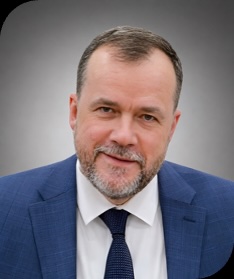
Wade Kusack
Founder & CEO, LYNC; Project Director
Leader in relational diplomacy and Cross-Cultural Religious Literacy (CCRL) with over 16 years of designing and delivering programs that build social cohesion, prevent radicalization, and advance religious freedom across Eurasia. Developer of an applied CCRL methodology that cultivates the civic and intellectual virtues underpinning free, pluralistic societies. Serves as Chair of the Eurasia Panel. Born and raised in Belarus and bilingual in Russian and English.
-
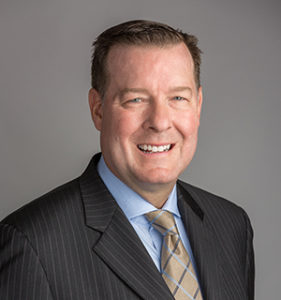
Dr. Chris Seiple
Senior Fellow, LYNC
Developed the framework of Cross-Cultural Religious Literacy and is a co-author of the philosophy of Covenantal Pluralism. He is a Senior Non Resident Scholar at the School of Public and International Affairs’ Center for Governance and Markets at the University of Pittsburgh. A former U.S. Marine infantry officer, he wrote his doctorate at the Fletcher School on U.S.–Uzbekistan relations. He co-chaired the U.S. Secretary of State’s working group on religion and foreign policy (2011–2013).
-
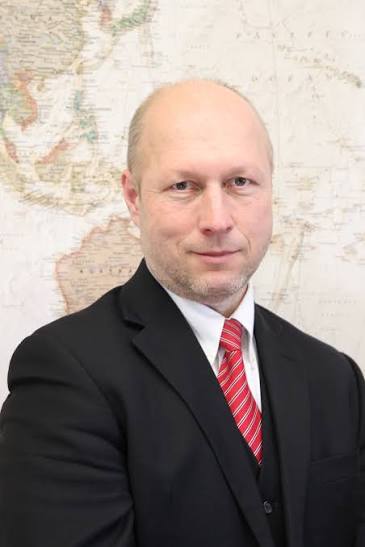
Ambassador Dr. Robert Řehák
Ambassador at Large and Special Envoy for Holocaust Issues, Interfaith Dialogue and Freedom of Religion, Czech Republic
Robert Řehák is a Czech career diplomat who has served as Ambassador at Large since 2019 and as Special Envoy for Holocaust Issues, Interfaith Dialogue and Freedom of Religion. He chairs the International Religious Freedom or Belief Alliance (the Article 18 Alliance). He initiated the Czech national strategy on combating antisemitism and islamophobia. Earlier posts include Deputy Spokesperson of the Ministry of Foreign Affairs, cultural attaché in Washington and in Israel, and President of the Society of Christians and Jews in the Czech Republic. He holds a Ph.D. from Charles University and studied in Heidelberg and Jerusalem.
-
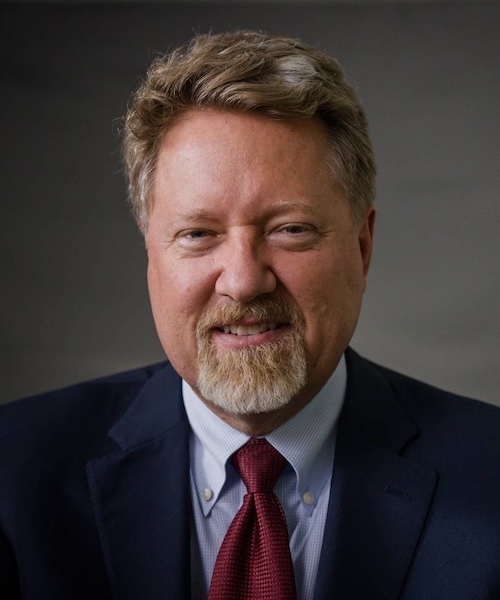
Greg Mitchell
Founder & CEO, IRF Secretariat
Co-founded the International Religious Freedom Roundtable in Washington, D.C., in 2010 and continues to chair it. The Roundtable is a multi-faith, multi-sector civic space that has convened participants from more than 800 organizations. As a Founder and CEO of the IRF Secretariat, he has supported locally adapted replications of the Roundtable model and now builds a global network of national and regional roundtables. He serves on the Article 18 Alliance Council of Experts. Through his public affairs practice he contributed to the passage of the Frank R. Wolf International Religious Freedom Act and the Global Magnitsky Act.
-
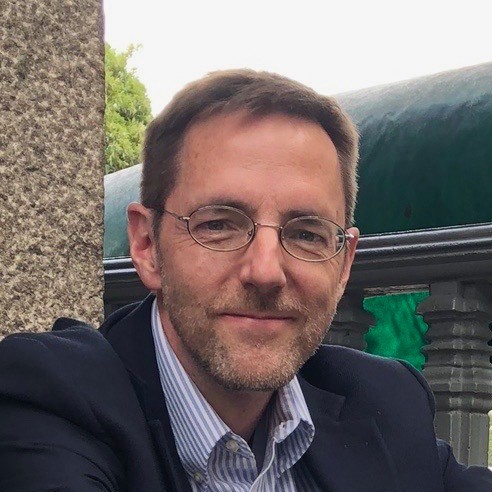
Dr. W. Christopher Stewart
Co-architect of Covenantal Pluralism
Christopher Stewart is a co-author of the philosophy of Covenantal Pluralism and led its development as a funded initiative. He joined the Templeton Religion Trust in 2013 and served as Vice President, Grant Programs and Chief Grants Officer until his retirement. During his tenure he shaped several of the Trust’s principal funding strategies, including the Covenantal Pluralism Initiative. Before entering philanthropy he spent twenty years on the faculty of Houghton College as Professor of Philosophy and Associate Dean.